Korean Peninsula Ecological Peace Tourism Information Center
The Imjin River Turtle Ship
Recording of the installed room1:191920×1080
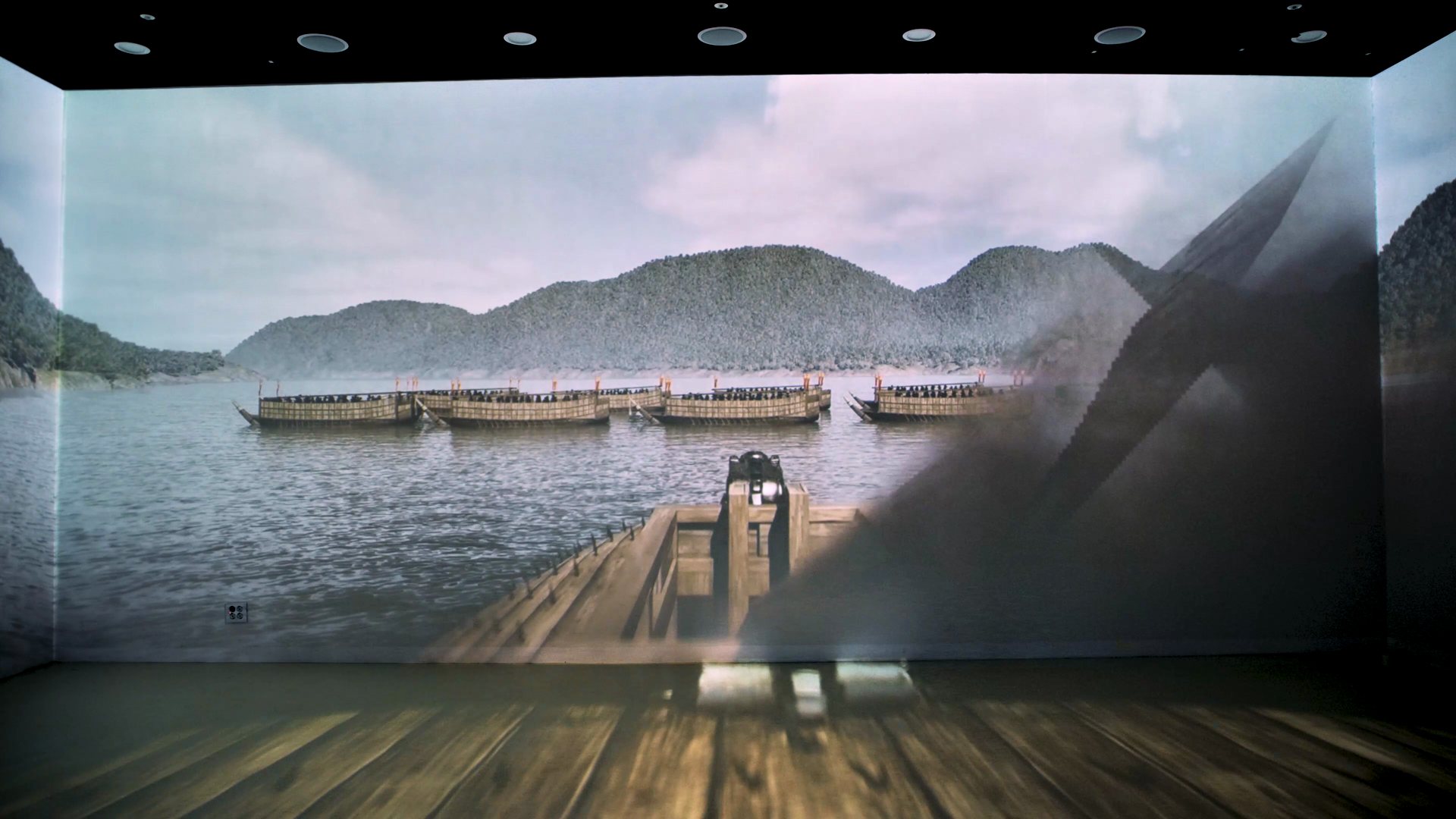
Where Joseon's first turtle ship first cut the water — a story that began on the Imjin River, moved into immersive projection.
The turtle ship is fixed in the popular imagination as an image of the naval battles in the southern sea, but the stage for this piece is the Imjin River. What the exhibition is about is not who won, but the fact of the place — it began here, on this river. So the centre of the frame is not the ship itself but the water it sits in and the terrain of the bank.
The camera sits close to the surface, nearly lying flat. Dropping the visitor's eye line to the height of the river makes the ship read larger than it is, and brings someone standing in a gallery closer to the sensation of standing on a riverbank. Fog, backlight and spray are the main devices carrying scale.
The picture is Unreal Engine 3D animation combined with live-action footage shot on green screen. Building the river, the fog and the hull entirely in 3D is what made it possible to hold camera height and hull proportion exactly from shot to shot, and to keep the form inside the historical references. I ran this as the creative director leading the project team — I designed the whole production process, and did the final compositing and grade myself.
“It could not be a picture of a battle. It had to be a picture of the river that ship was put into.”
Making Korea's First Turtle Ship Move
Korean Peninsula Ecological Peace Tourism Information Center · a production blog
I wasn't there when this project started.
I came in later, because there was a problem. A team of five 3D artists and a team leader were building an immersive piece, and there was no proper storyboard and nobody to give them clear direction. Nobody on the project had made immersive content before.
The client's wish was simple to say: they wanted visitors to feel like they were standing inside the military training of Korea's first turtle ship. That meant the walls had to read as an open space on the river where the training happened, and the soldiers on it had to move like real people.
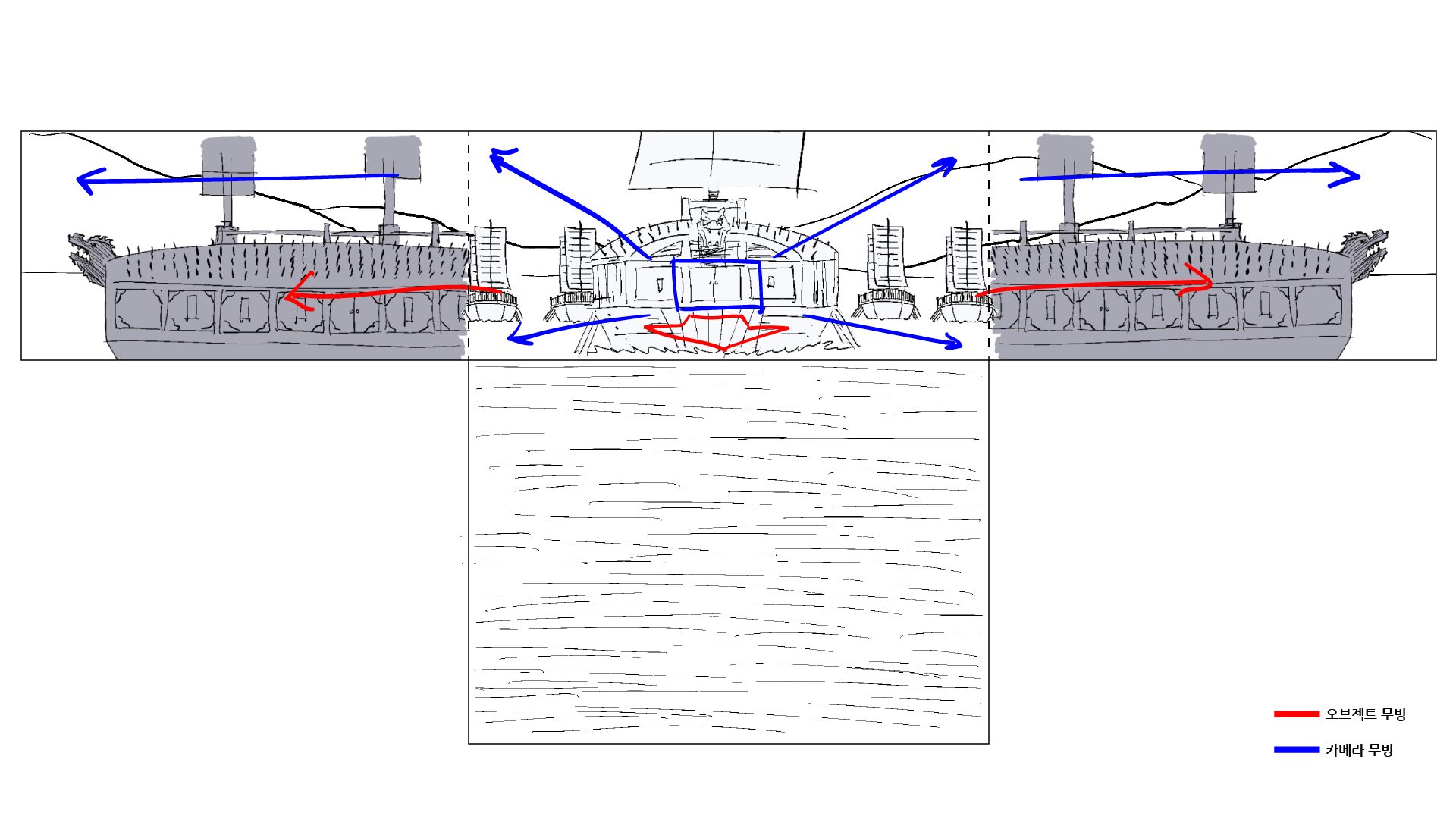
A storyboard already existed, but it had been made by someone outside the company who hadn't thought of this as immersive content. That matters more than it sounds, because in immersive content every screen needs its own shot and its own angle, drawn out, so the 3D team can look at the board and know exactly what to build.
So I redrew the whole thing myself, scene by scene and screen by screen. I didn't make it for the client. I made it only so the 3D team would understand what to make. It took time, and it wasn't perfect, but it was a great place to start, and it worked. I didn't need anything but the storyboard to communicate with the team, and we had no miscommunication at all.
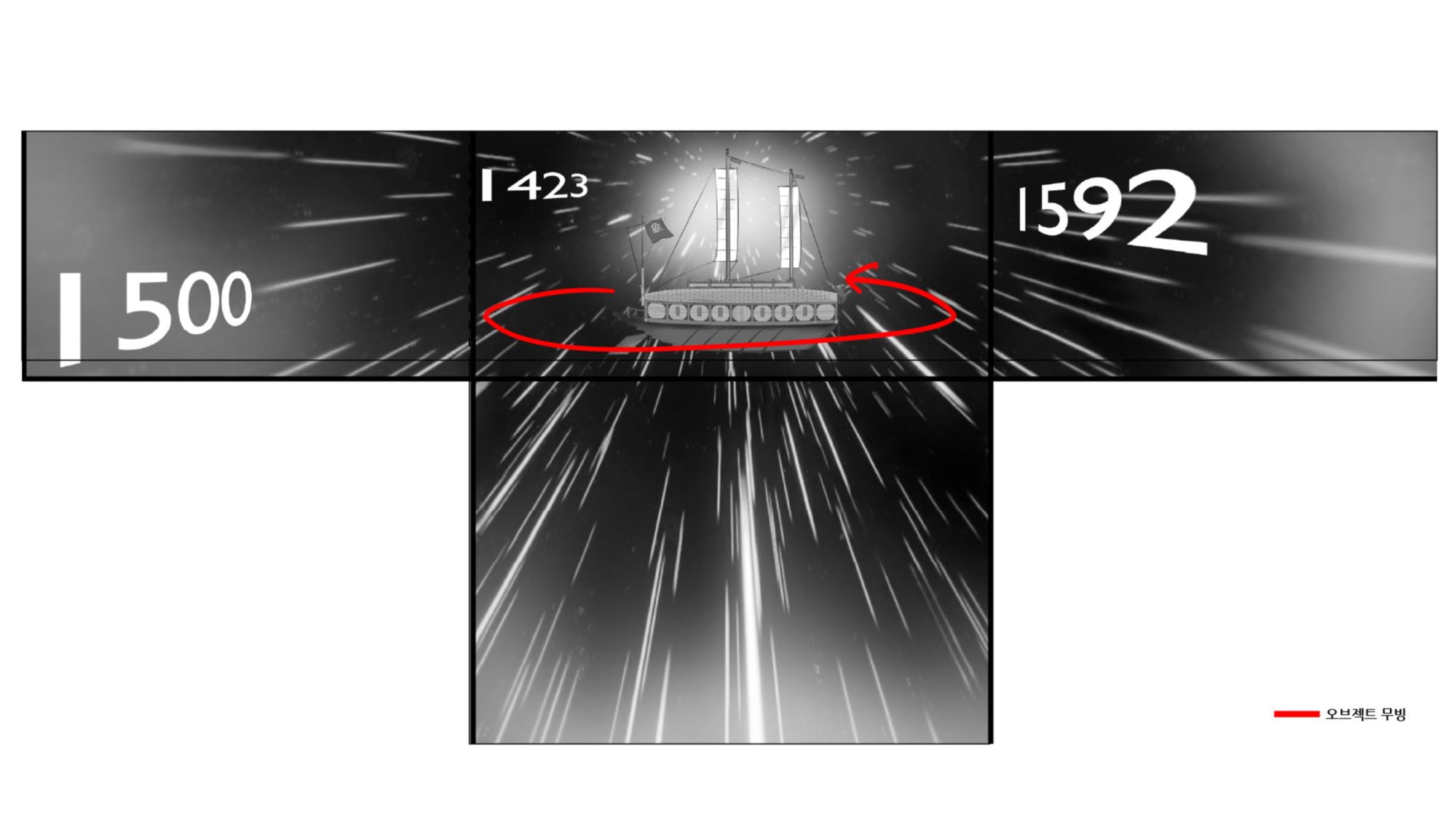
It helped that the team was building in Unreal Engine and I understood the tool, so we kept talking while they built. Every morning we had a short stand-up.
Then came the part that's still hard for me to picture. We hired real actors to play the soldiers, put them in real costumes, and shot them on green screen to composite into the 3D scenes. Nobody could see the final scene yet, and the actors had to behave as if they were on a ship that wasn't there, and somebody had to direct that. It was also very easy to miss a scene. My detailed storyboard really helped.
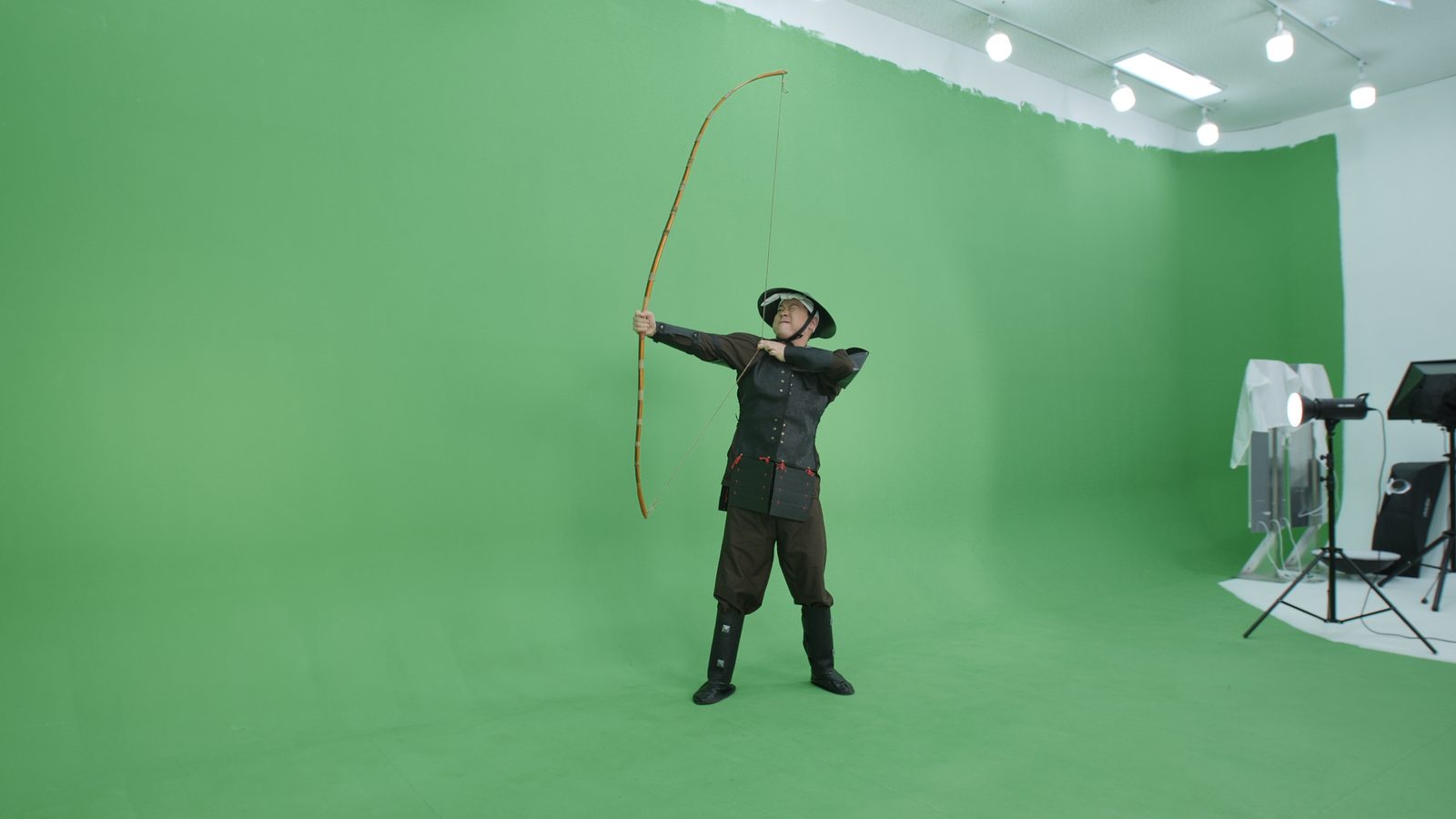
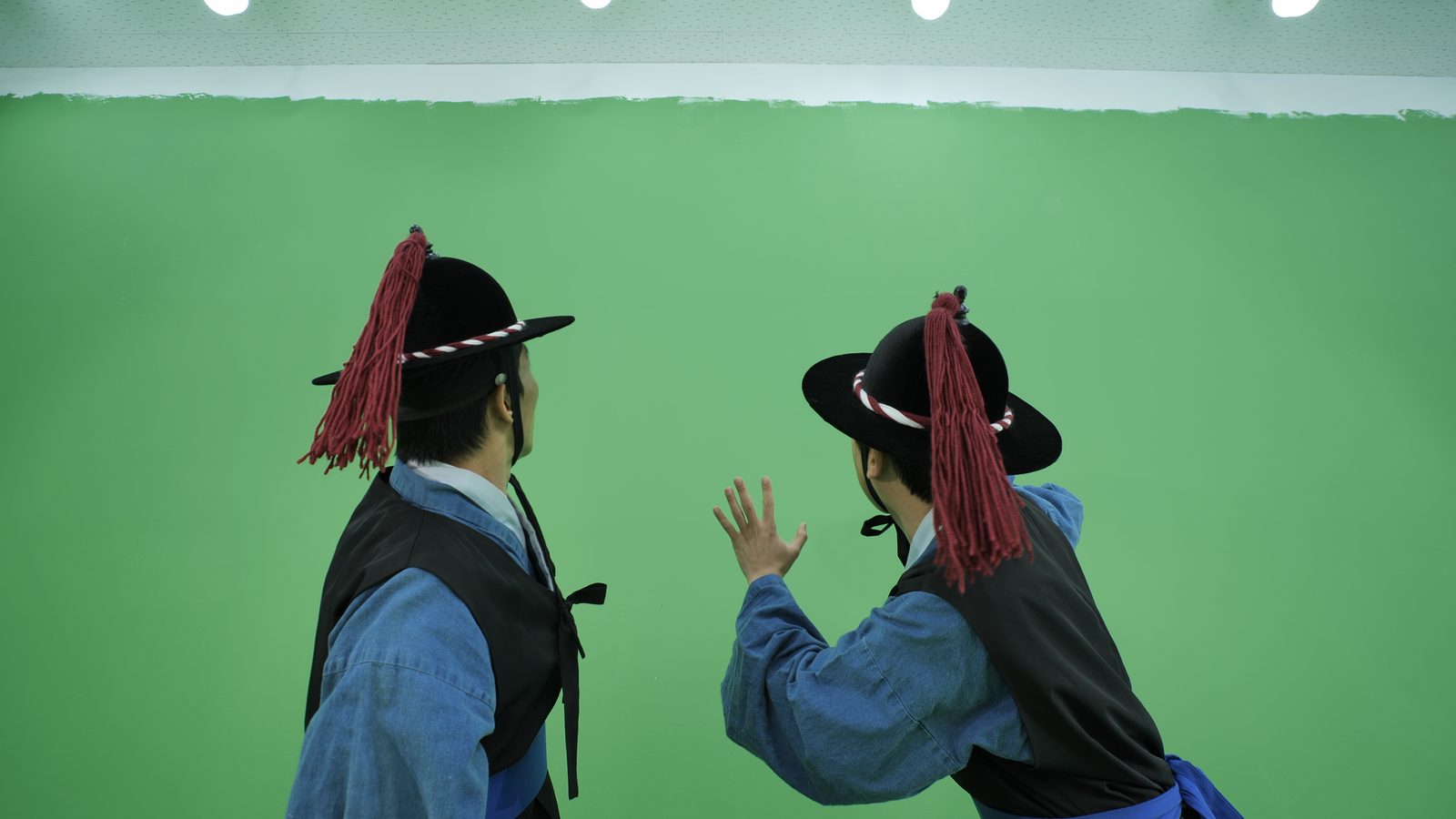
We showed the actors the 3D previz so they could see what they were standing inside. For the rowing scenes, we built a real wooden oar, so they wouldn't have to fake the weight. It was heavy. It was actually heavy.
The best decision I made on set was not to direct the shoot, even though I was directing the whole project. A director with more live-action experience ran the set and the actors, and I was a supporting director for one day. It was the right call: they could focus on controlling the set and the actors, and I could keep seeing the bigger picture.
The first time I saw the final work on the walls, I thought: that's it.
Everything had come out as we planned. That was thanks to careful preparation, and to the passion of the 3D team.
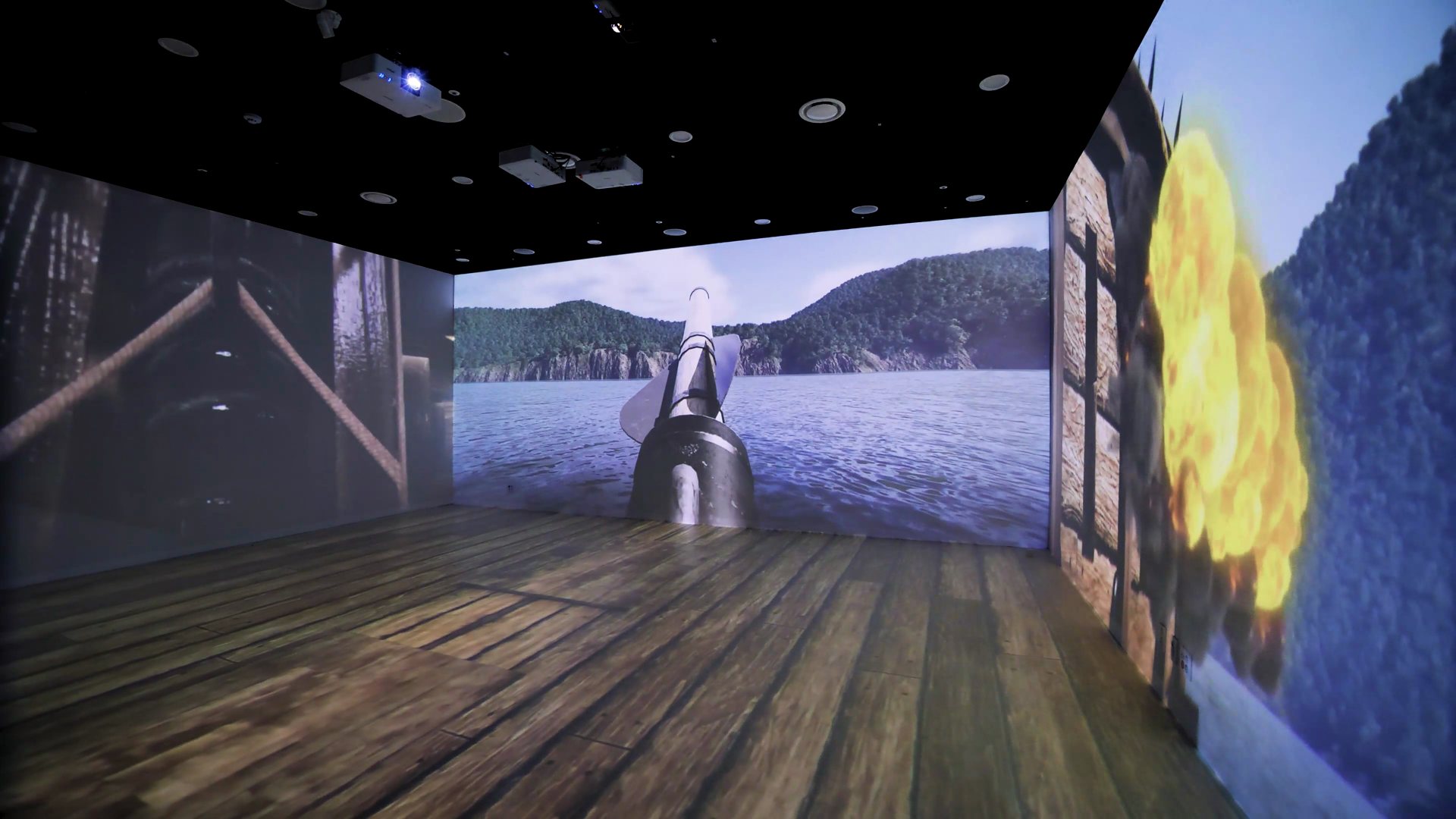
How it was made
- 1
Reference & Consultation
Gathered terrain material for the Imjin River area and historical references for the turtle ship, and split the scenes into on the river, on the bank, and below the surface.
- 2
Look Development
Took fog and backlight as the base condition, settling a look in which the ship reads first as a silhouette.
- 3
Setting the Rules
Locked the proportions and structure of the hull, and standardised camera height against the water line.
- 4
Generation & Compositing
Rendered river, fog and hull in Unreal Engine, and composited the green-screen live-action footage over them.
- 5
Grade & Master
Set the final grade myself, evened out brightness across the seams of the multi-surface projection, and matched the loop.
Credits
If you are planning something at this scale
Available for exhibition and museum film, media façades, and immersive projection.
hello@jmukpark.com ↗